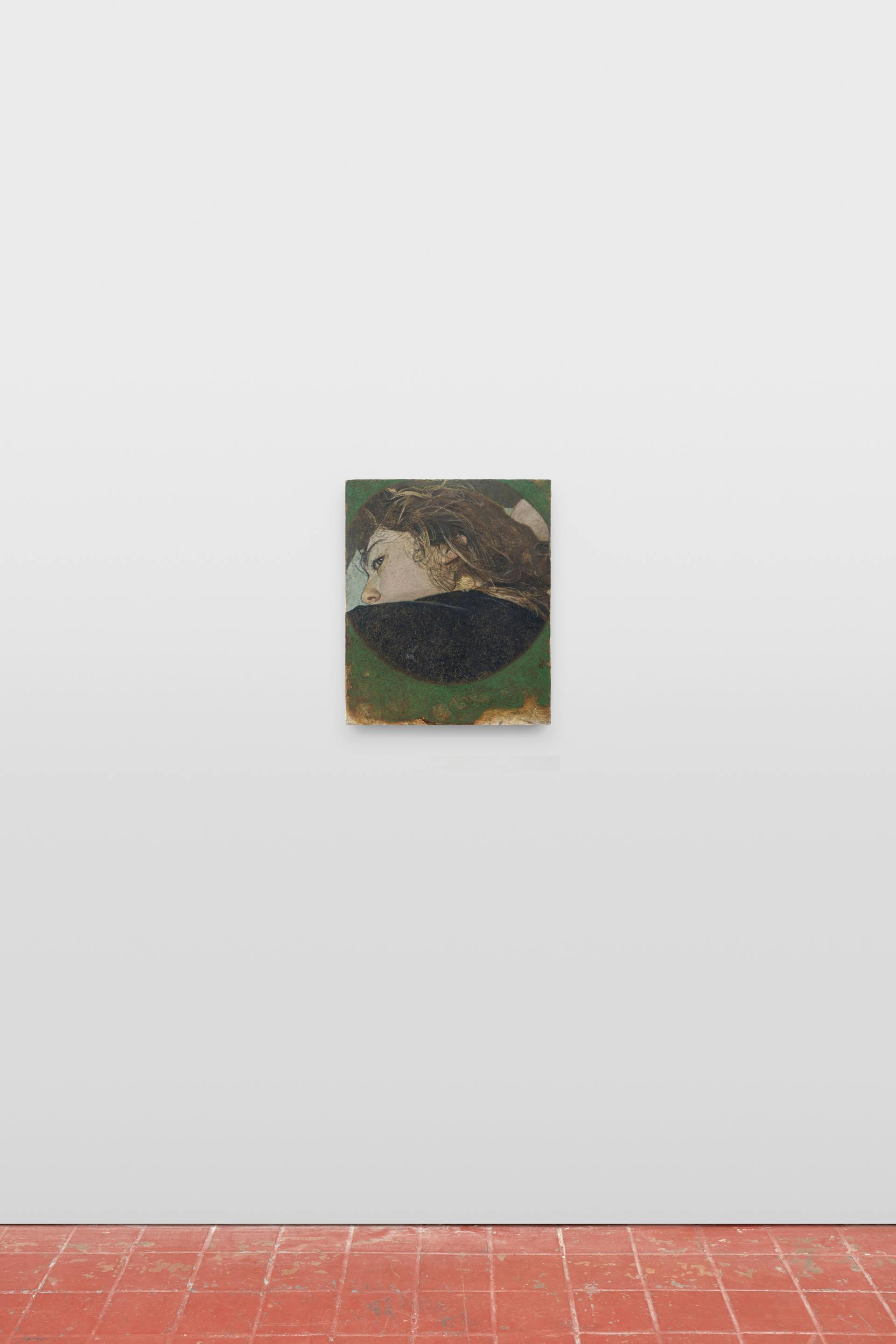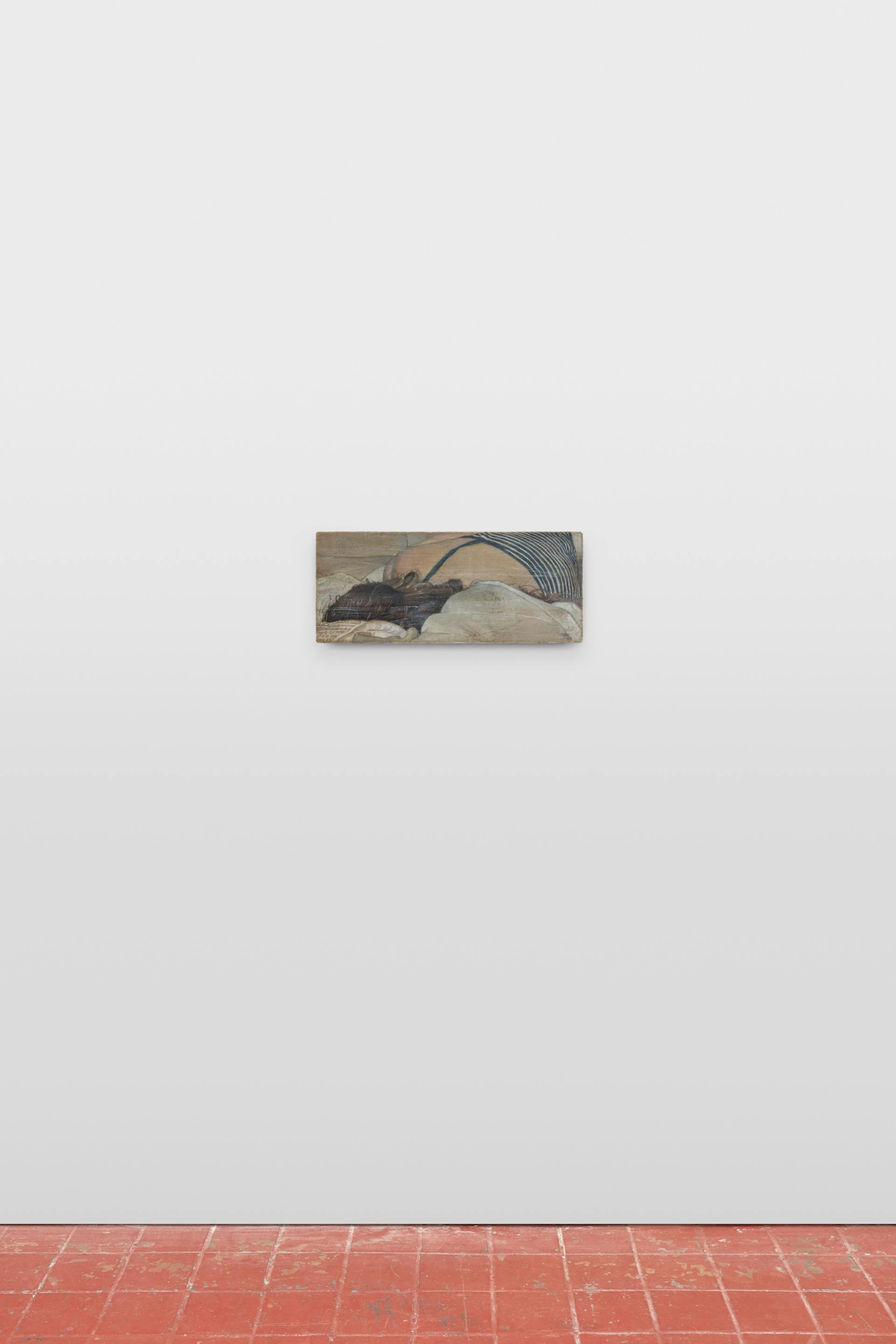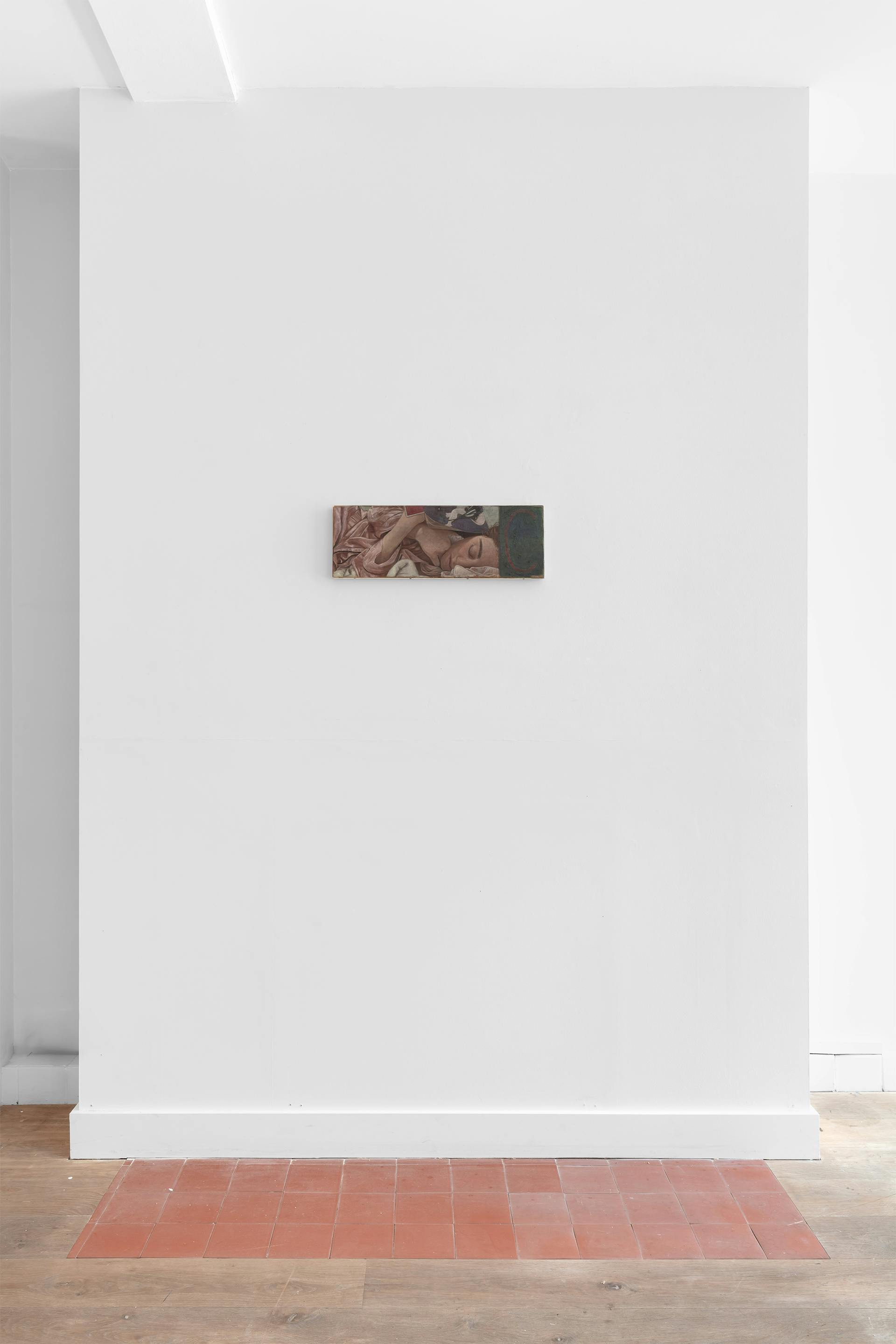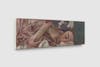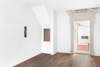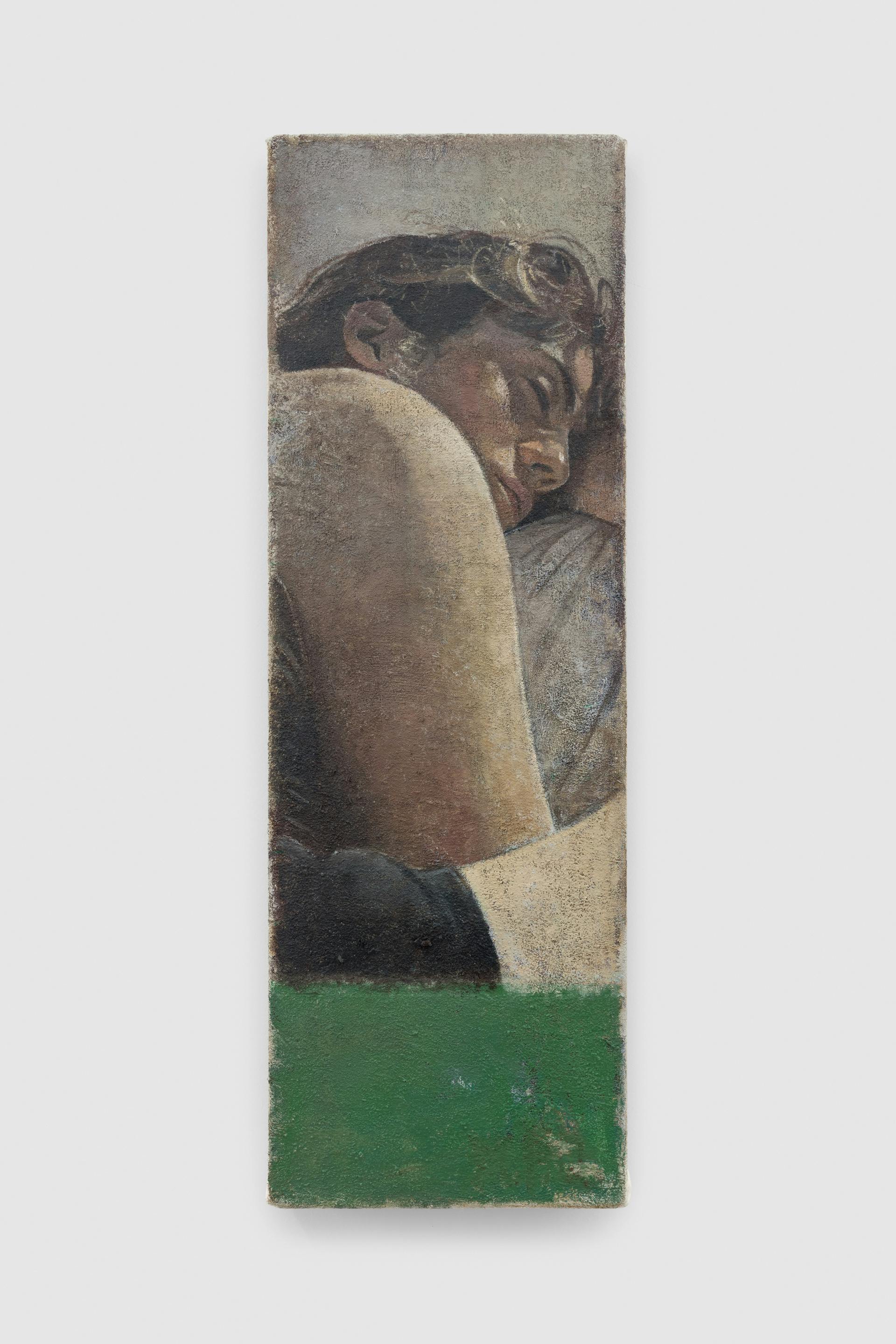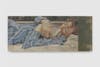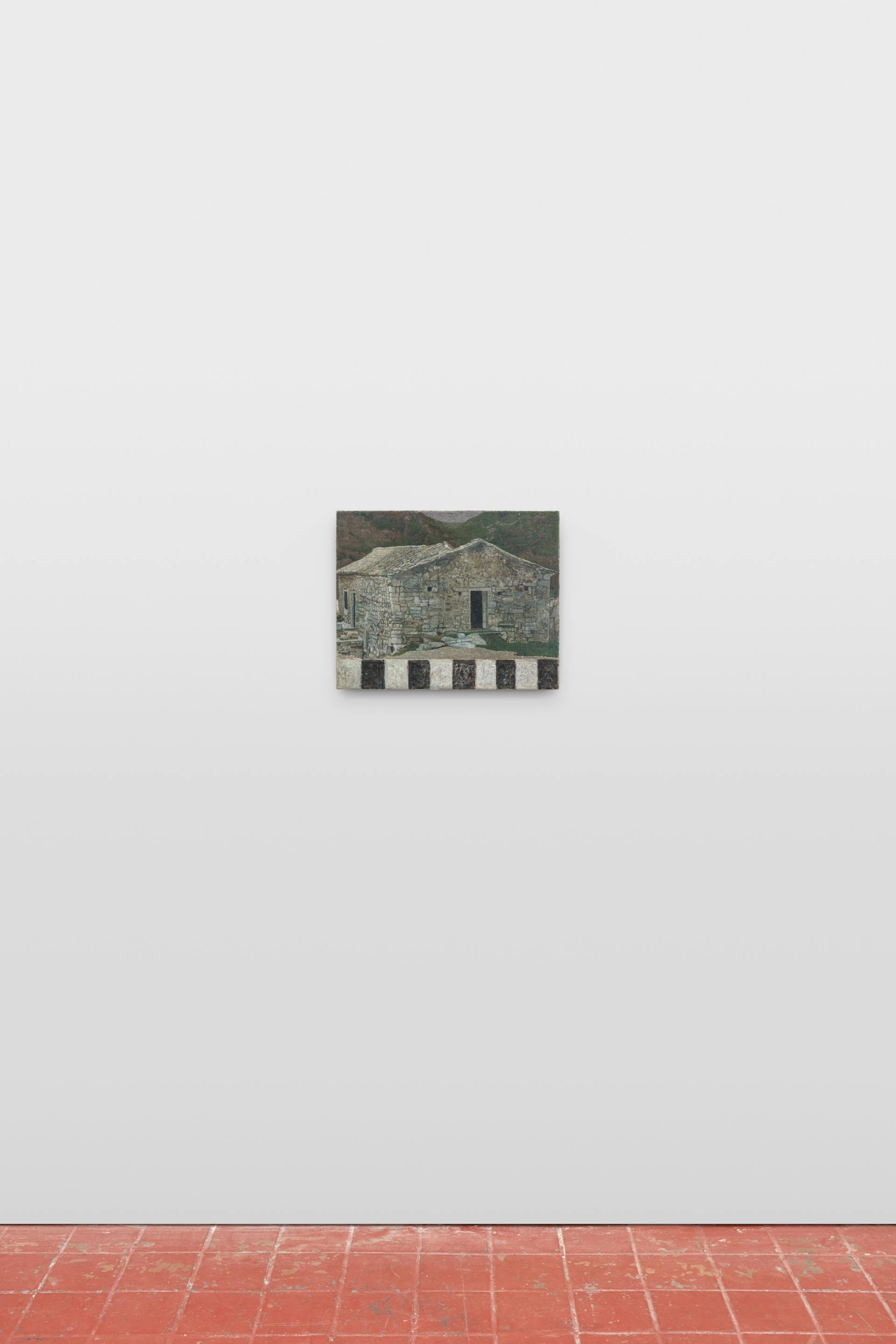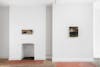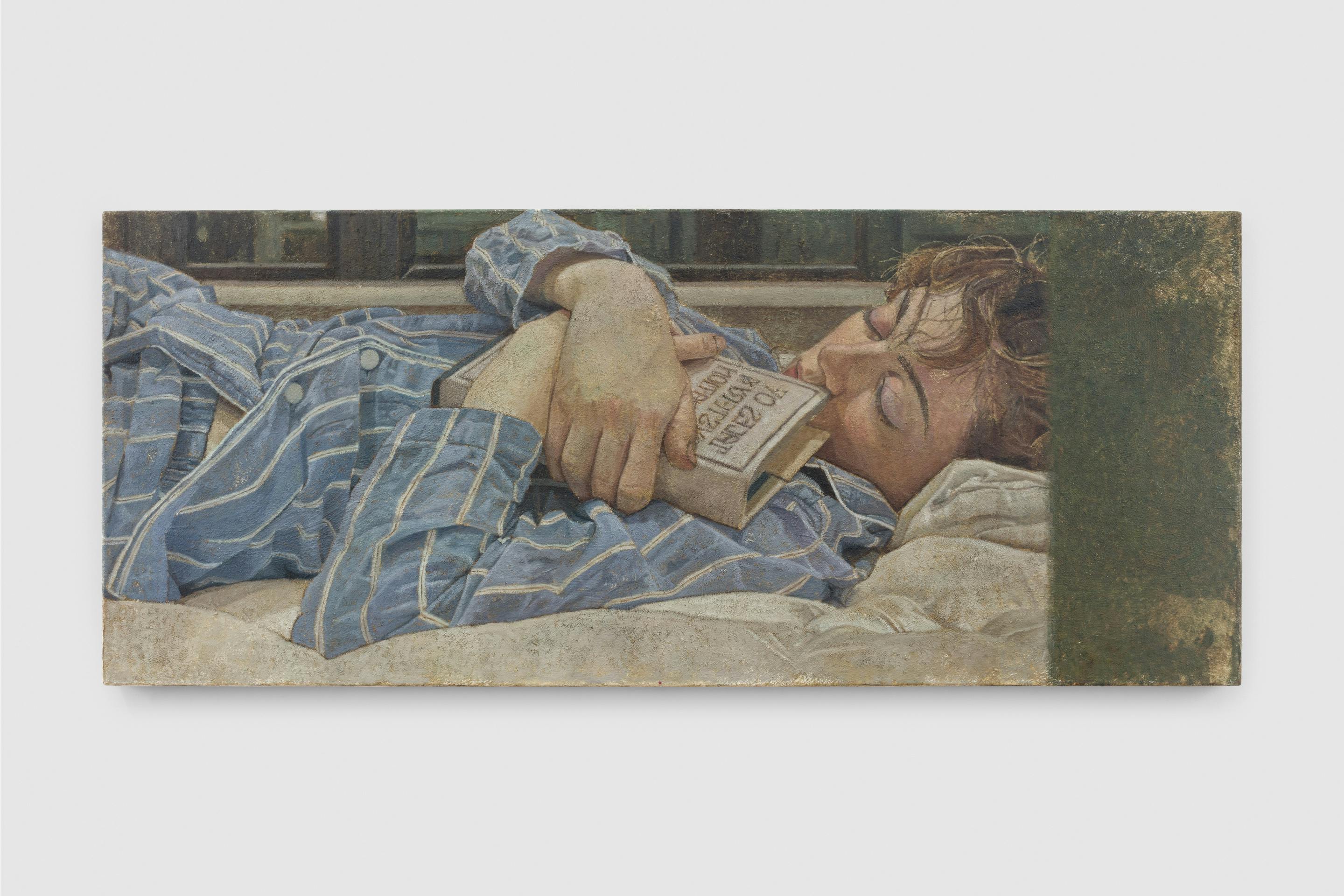
The exhibition A Moment's Rest by Marc Prats-Quintana excavates remembered moments of everyday intimacy. This collection of seven oil paintings features the semi-imagined character, Claudette, between states of waking and resting. Claudette is herself a creation of layered personal histories and geographies, connected deeply to people close to the artist and places of his childhood in Costa Brava.
Prats-Quintana's practice examines painting's role as a contemporary artistic medium. Painting in its many forms is a well-trodden mode of representation stretching back thousands of years. According to Prats-Quintana, the main justification to pursue such a historically-charged medium nowadays is pure romanticism, and in response, he creates materially-vivid work.
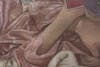
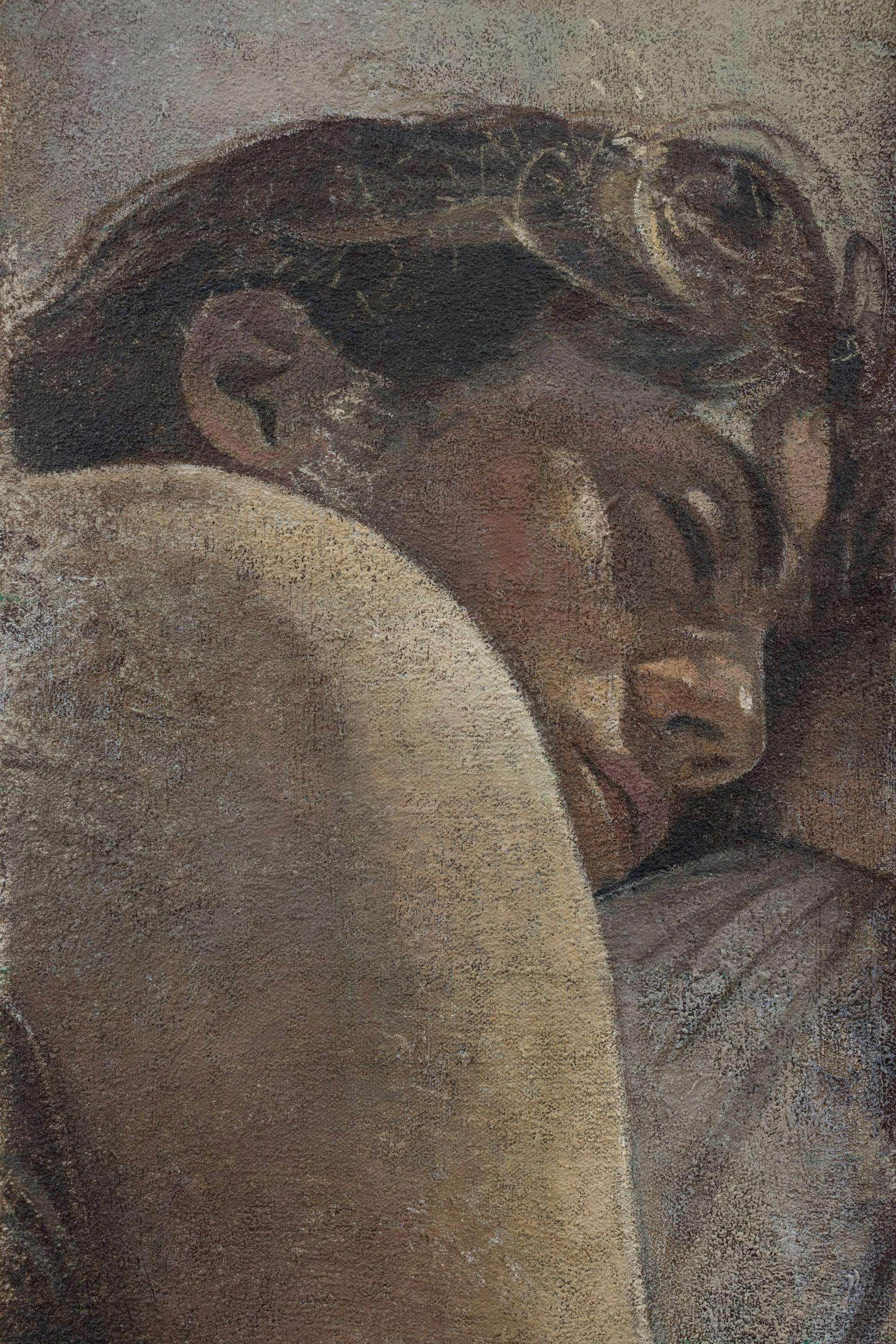
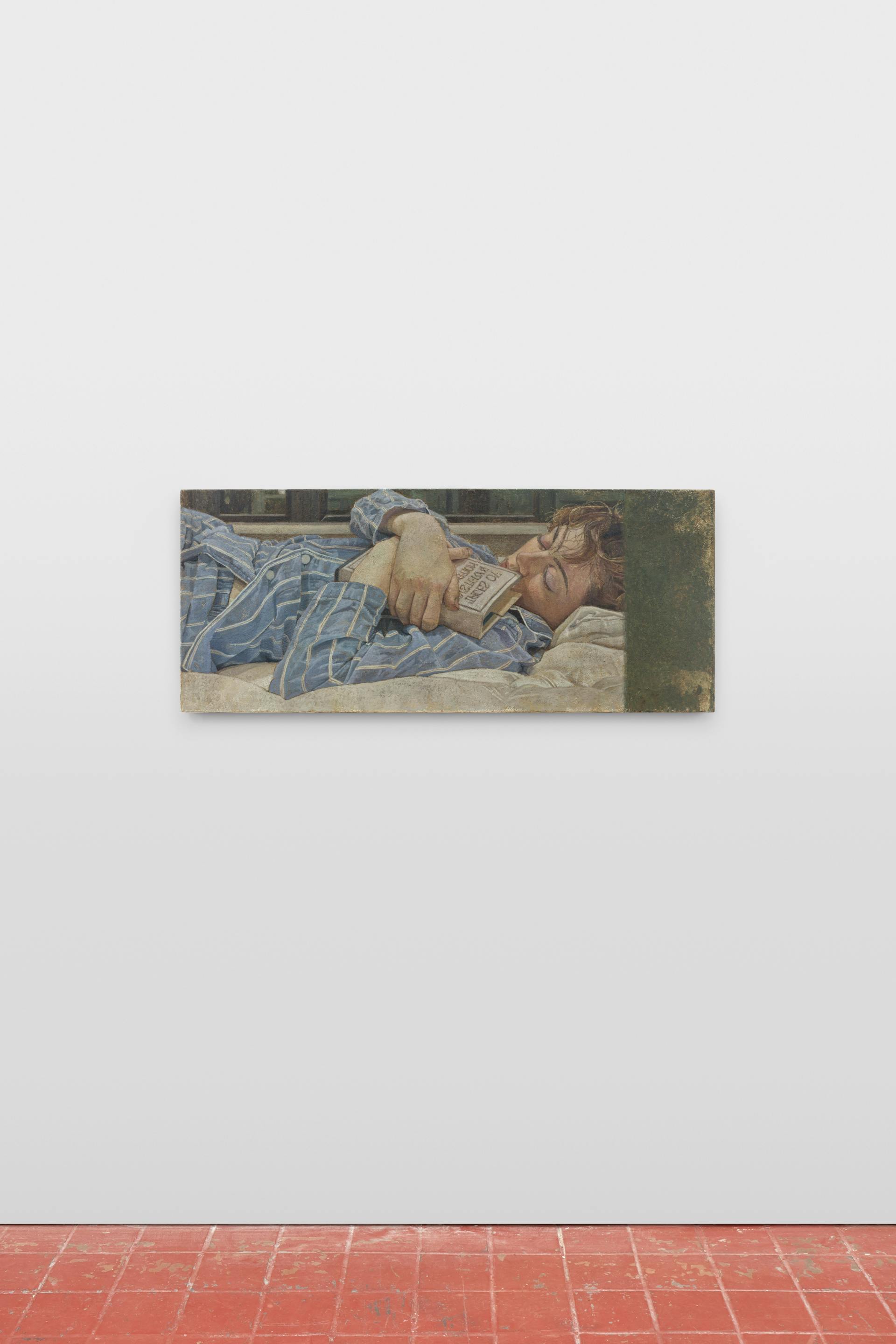
The artist sees his process as archaeological. Paint is mixed with raw pigment, sand, and other debris. What accumulates over time is then scraped back to reveal the buried memory of paintings past. Building in layers, Prats-Quintana's practice evokes that of . Her images of an industrialised Britain show painting to be a process of steady accretion. It is through material layering that Clough's and Prats-Quintana's tactile, earthy palettes become an exploration of subjective memory. Though when these layers are eroded, and become coarse, the surfaces of Prats-Quintana's canvases look to the work of an artist closer to his roots; namely, . The Informalist Catalan painter incorporated abrasive substances into paint to tether his work to a tactile, lived reality. Much like Tàpies—and seen in paintings such as Claudette on the Sofa—Prats-Quintana's emphasis on surface creates contained sites of memory and resistance.
While intimate, his paintings often involve photography in their initial stages. As opposed to diminishing Prats-Quintana's romantic ethics, the camera's mechanical nature confronts a tension inherent to painting today, raised when the personal is made available for public consumption. His works therefore comment on the viability of the contemporary image economy, its production and circulation. Similar ideas find their way into the work of Norwegian artist , whose images of mechanisation reflect on the nature of Post-War civilisation. As in Rickhard's compositions, Prats-Quintana uses cropping, layering and collage throughout his work; superimposed circles, like dust caught by photographic flash, break the image of Claudette in Monochrome; a modular initial frames the composition of Claudette and Hrabal. In many of his paintings, form is a starting point from which to capture a fleeting moment.
A Moment's Rest becomes a visual metaphor for 'the long now': conceptually tethered between the weight of memory and history, and a contemporary consideration of the future of images. It asks what endures through acts of depiction, what accrues through time and material, and what is irrevocably lost. Between excavation and projection, Prats-Quintana's paintings register both the fragility and persistence of seeing.
References
1
2
3
4
5
Marc Prats-Quintana, A Moment’s Rest