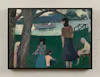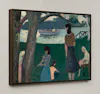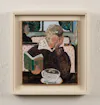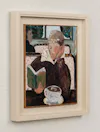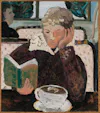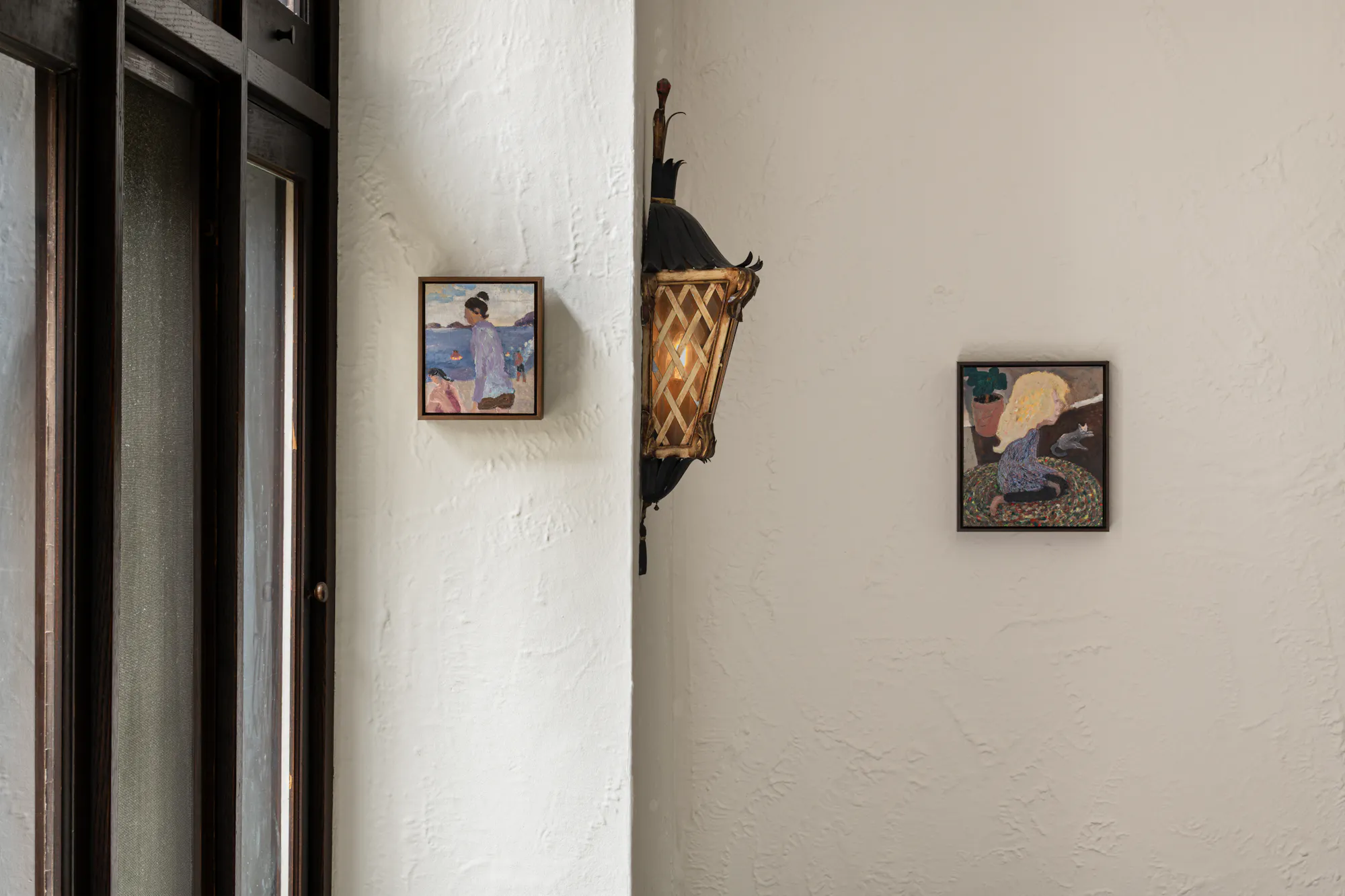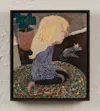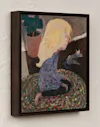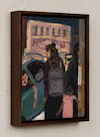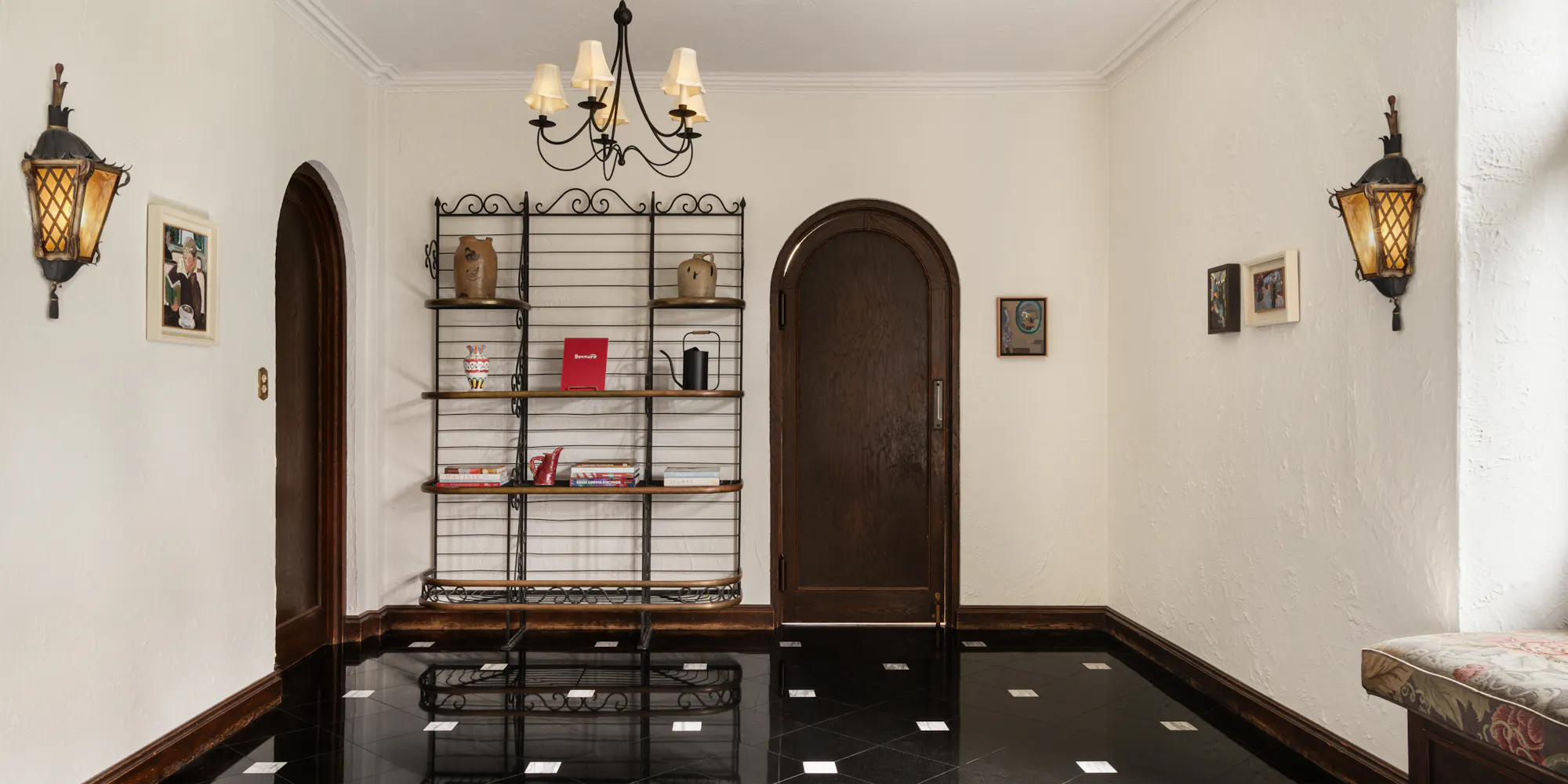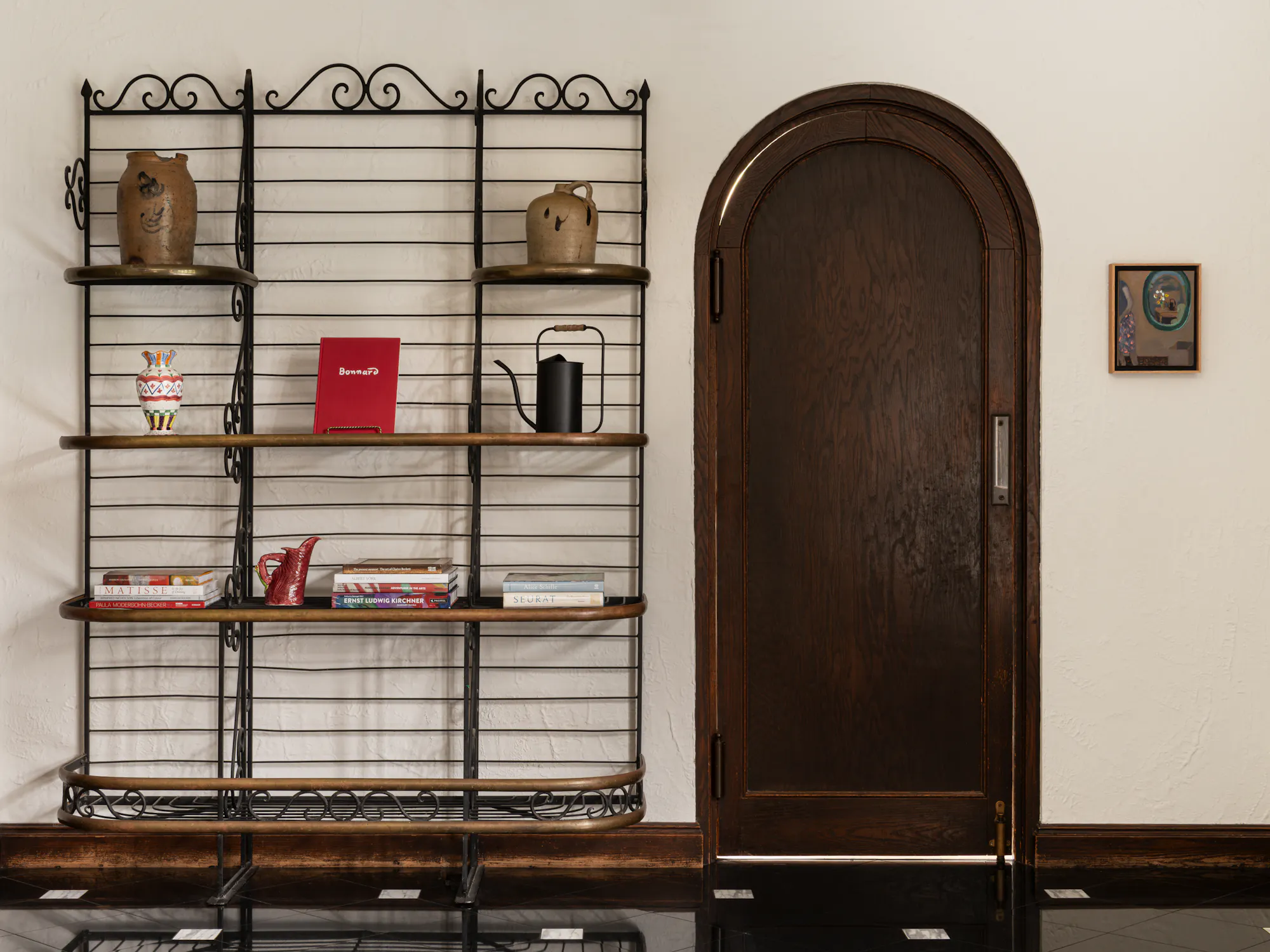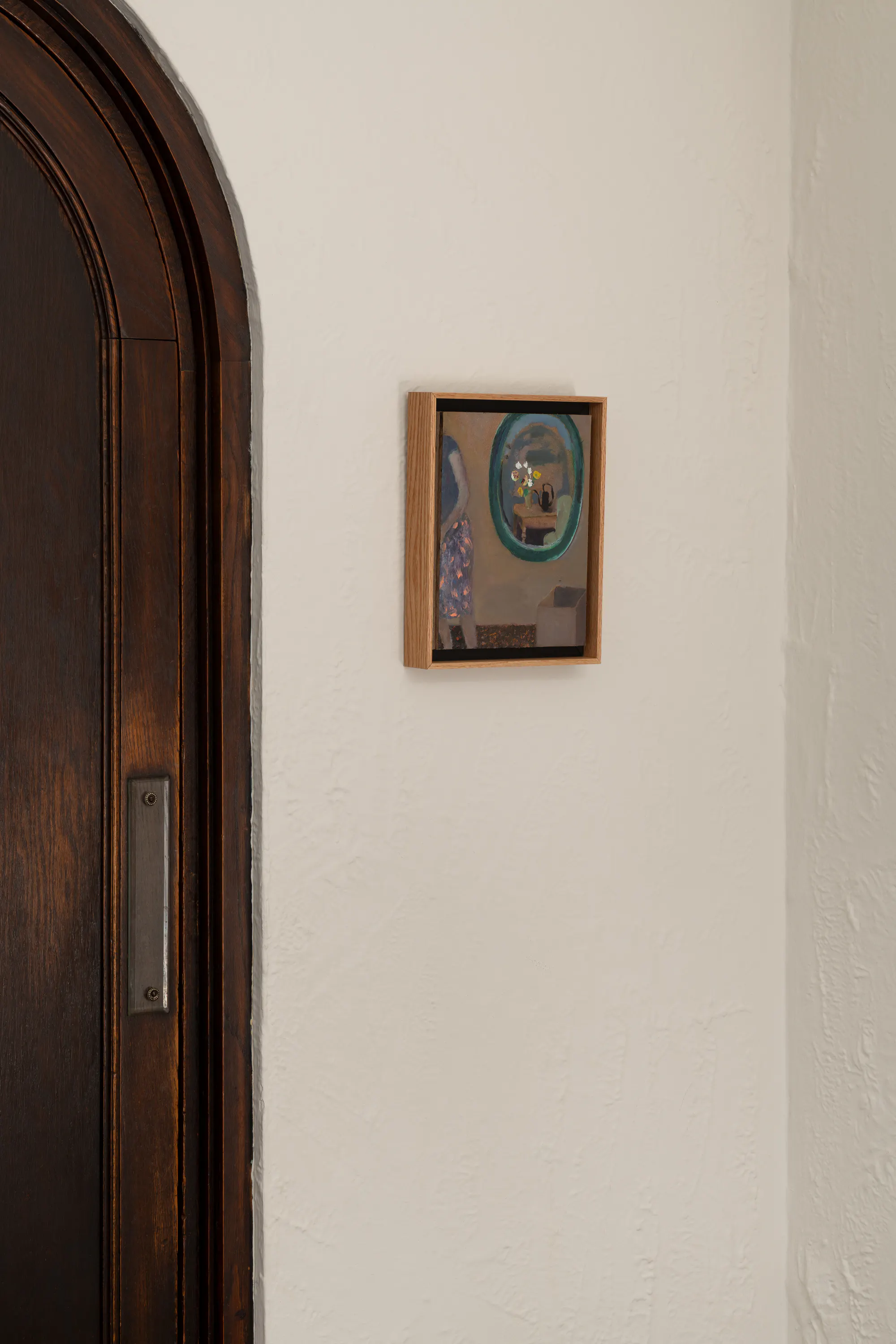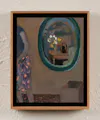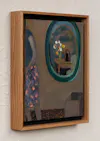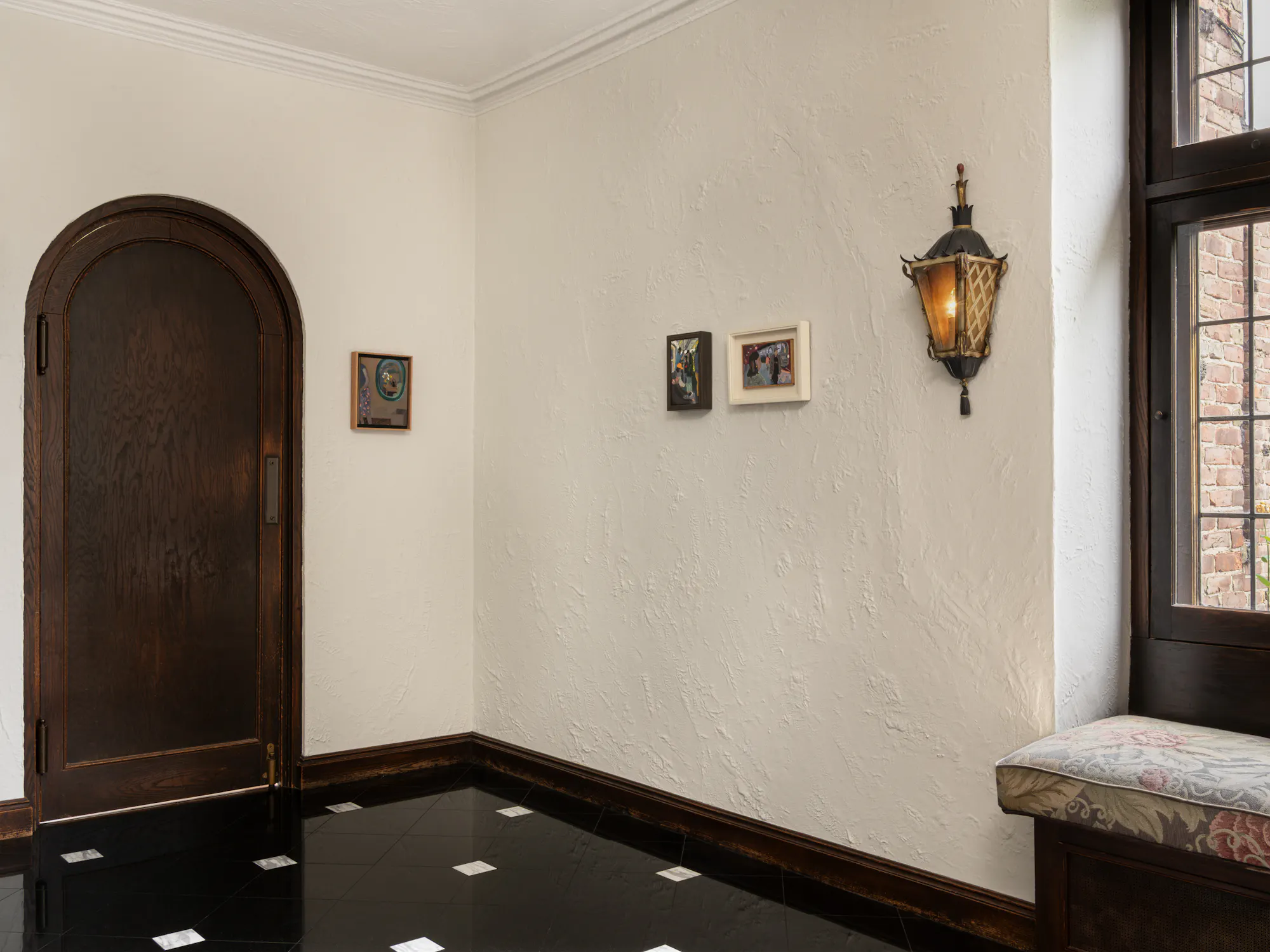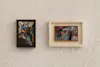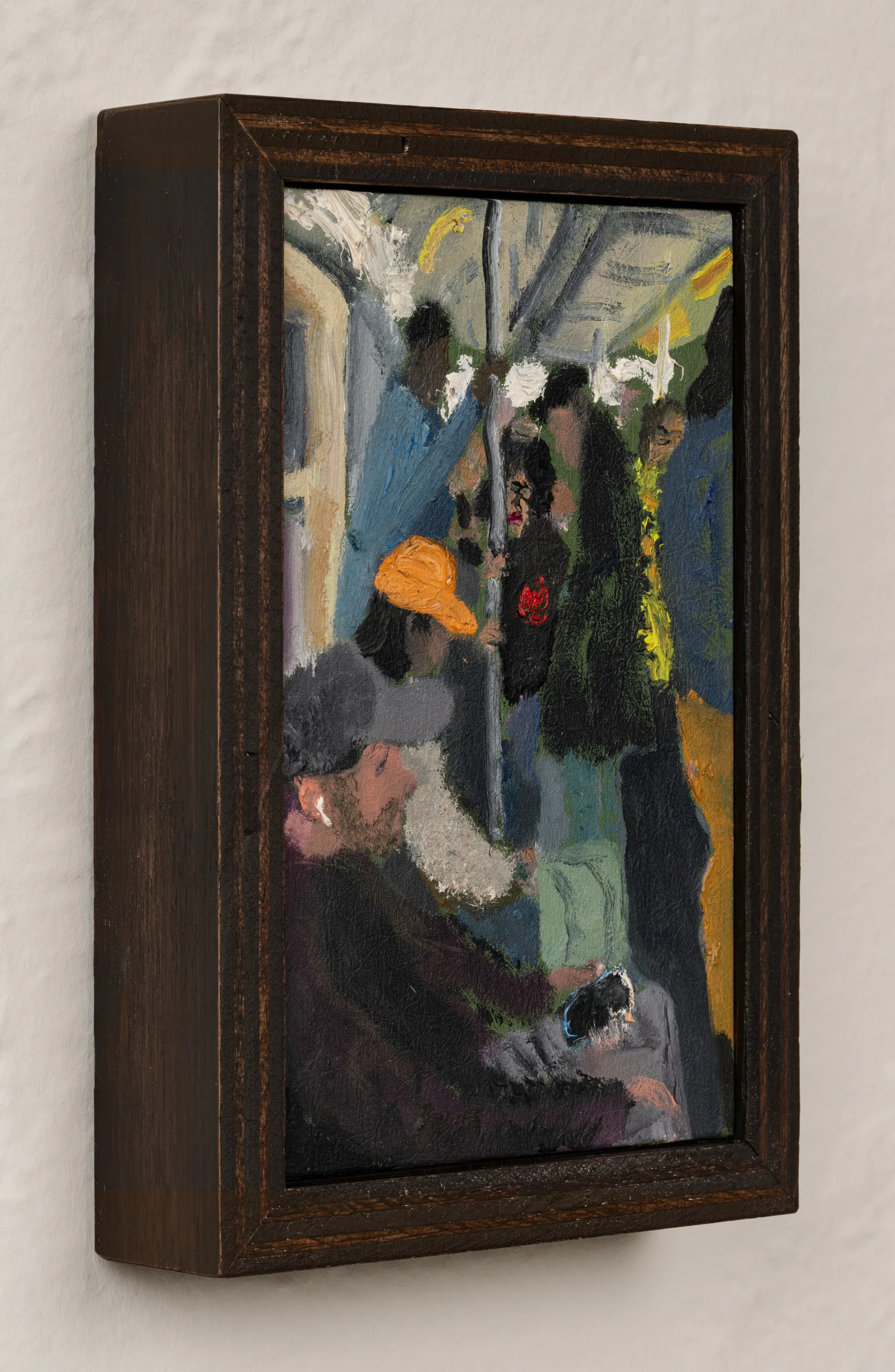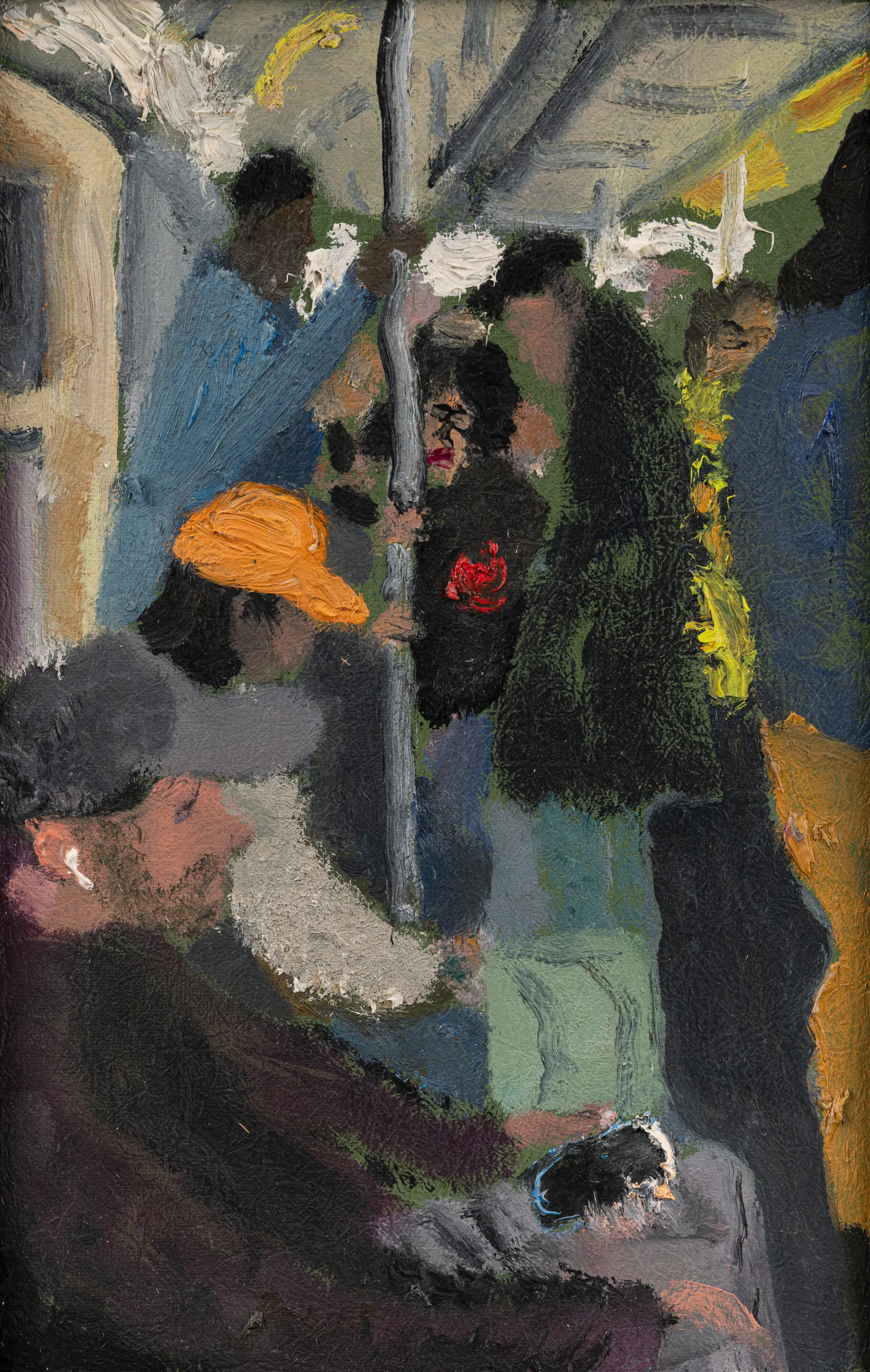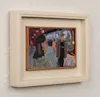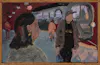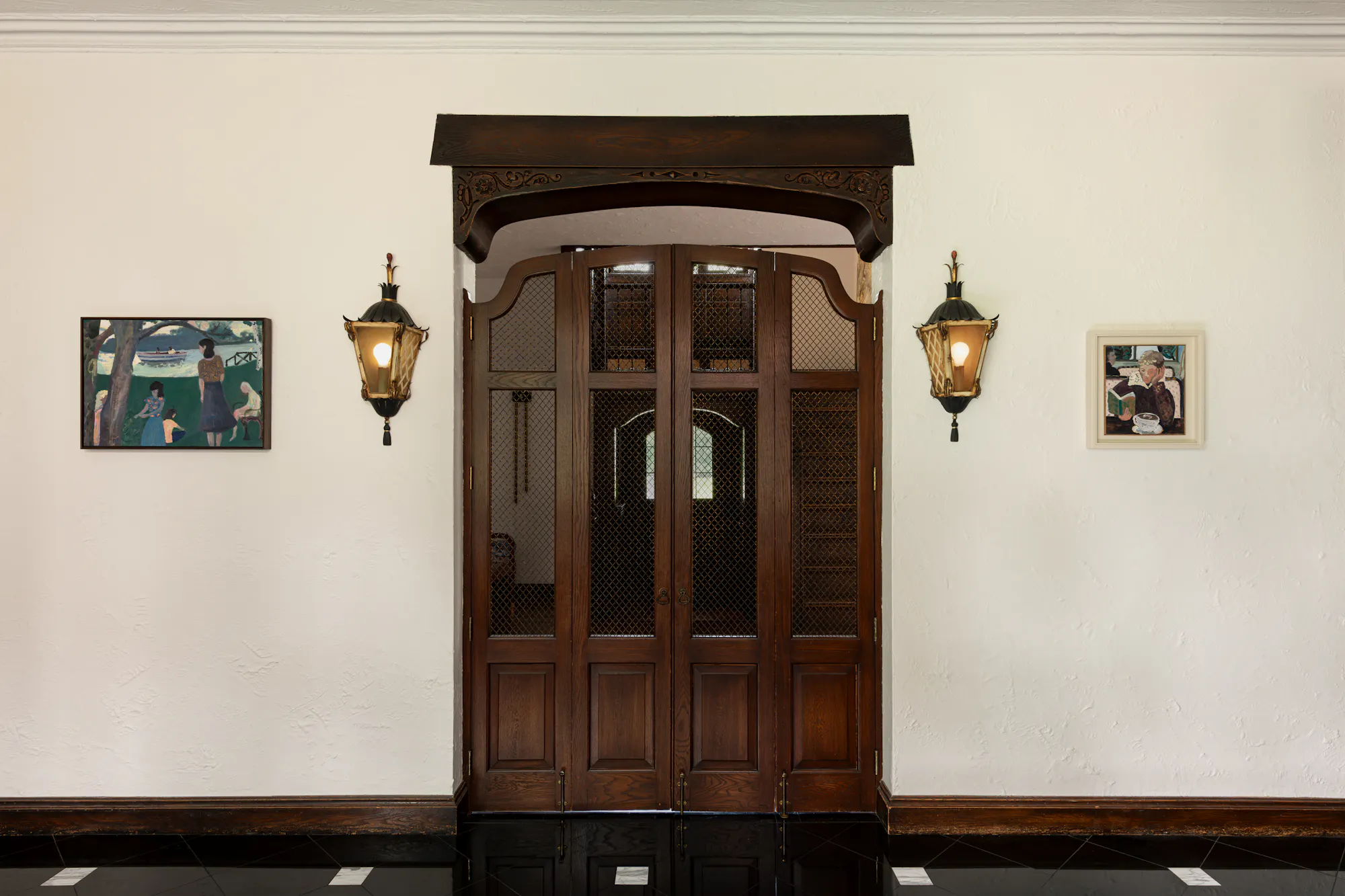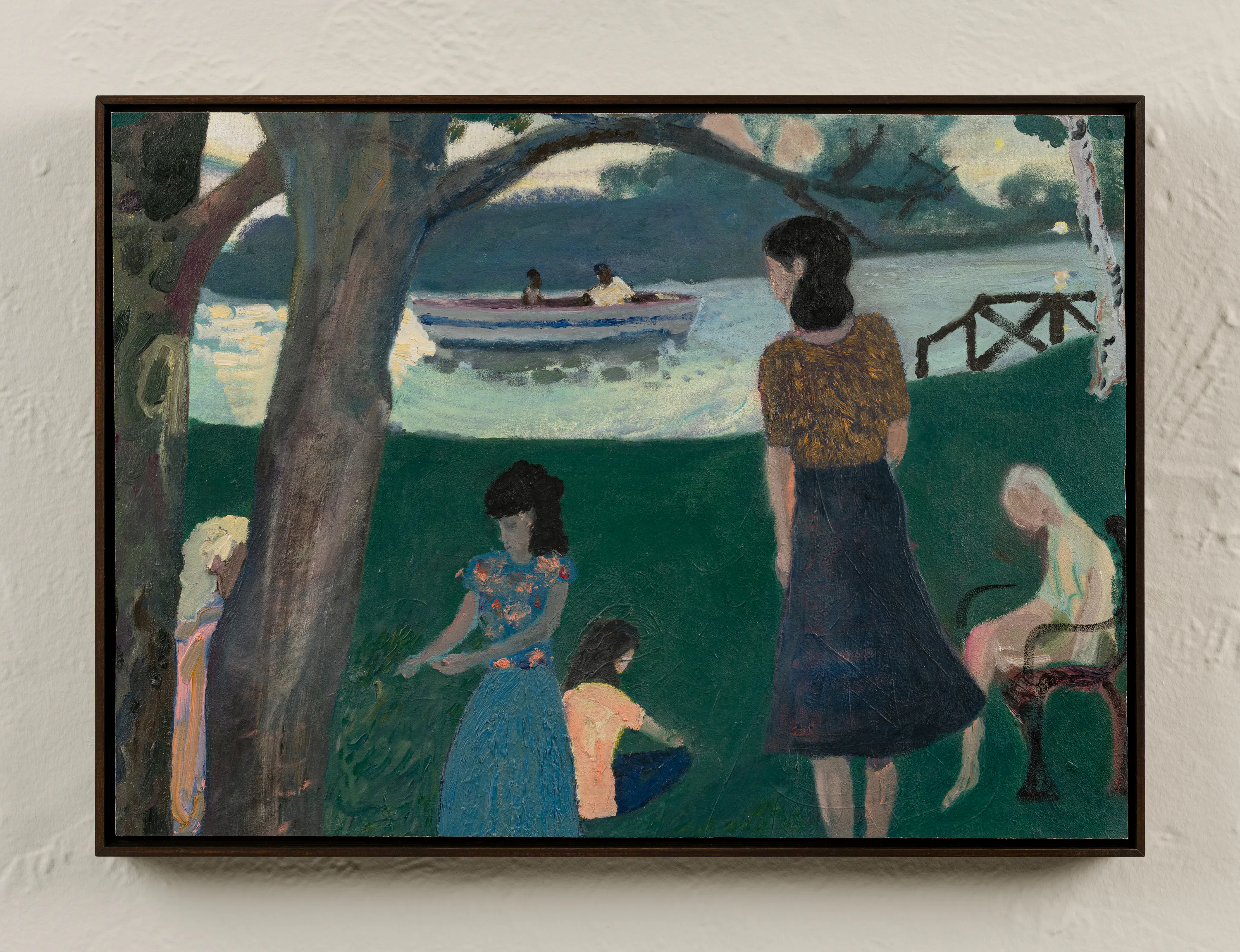
The exhibition Won't Be Long by Cody Heichel gathers eight small oil paintings of people who do not know they are being looked at. A young reader bends over a book in a café; passengers wait on a platform under a maroon night sky; a woman crosses a lit street with a child at her side; a girl kneels on a braided rug while a cat sleeps on the sofa behind her. Heichel works from life in public and private spaces, sketching quickly and discreetly, and describes the experience as confrontational: a tension between the wish to see and the wish to go unnoticed. Working surreptitiously, he says, allows the people around him to carry on as they would.
What these paintings propose is that the near-at-hand is enough. Rothko described Milton Avery's subjects as his living room, Central Park, his wife, his daughter and whatever world strayed through his studio, and Avery painted them for forty years without the work ever registering as a shortage. In Adolescence, gives his daughter a face of pale, almost erased yellow and lavishes the surrounding chair, wall and floor with warm pinks and tawny browns; the room is not a setting for the girl but her equal. painted the yard he happened to be lying in on his honeymoon, a horse and a pig cropping the grass while the poet stretches out along the bottom edge. Heichel is making the same calculation. A café table, a train platform, a mirror in a hallway, a child on a rug. This is a decision about what is worth painting rather than an admission of what was available.
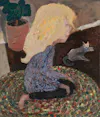
The evidence for it is that Heichel does not rank his subjects. Eloisa with Cat names someone he lives with; Reader at the Cafe names a stranger by their activity, someone who almost certainly never knew the painting was being made. Set the two panels beside one another and nothing separates them. The same scale, the same speed, the same refusal to finish a face. In Eloisa with Cat the braided rag rug takes russets, bottle greens, dirty ochres and small hot flecks of red, and has absorbed more decisions than the child kneeling on it. In Reader at the Cafe a crocheted collar is built up in thick cream loops while the face settles in a handful of strokes. painted his own wife feeding their child and gave the lace at her wrists the same attention as the tenderness he had come for. laid two children into a meadow in blunt slabs of black, brick red and grass green and let their faces go. In all of these, affection is not directed at a chosen person but distributed evenly across everything that was in the room.
Heichel's handling carries the speed and directness that painters have reserved for work made in front of the subject, where nothing can be deferred and every decision stays where it landed. stood across the road from the St Kilda funfair and finished her board in a sitting; her one figure is a smear of rose already walking out of the picture. reduced his bathers to flat dark shapes on a green and lilac shore, resolved no further than they need to be. caught two wrestlers mid-writhe and left the crowd behind them a scatter of black marks. Train Station, at five by eight inches, is a few dozen decisions: a fur collar in one loaded pass, a train dissolved into grey and lilac smears. It is finished before it has time to become a performance of itself.
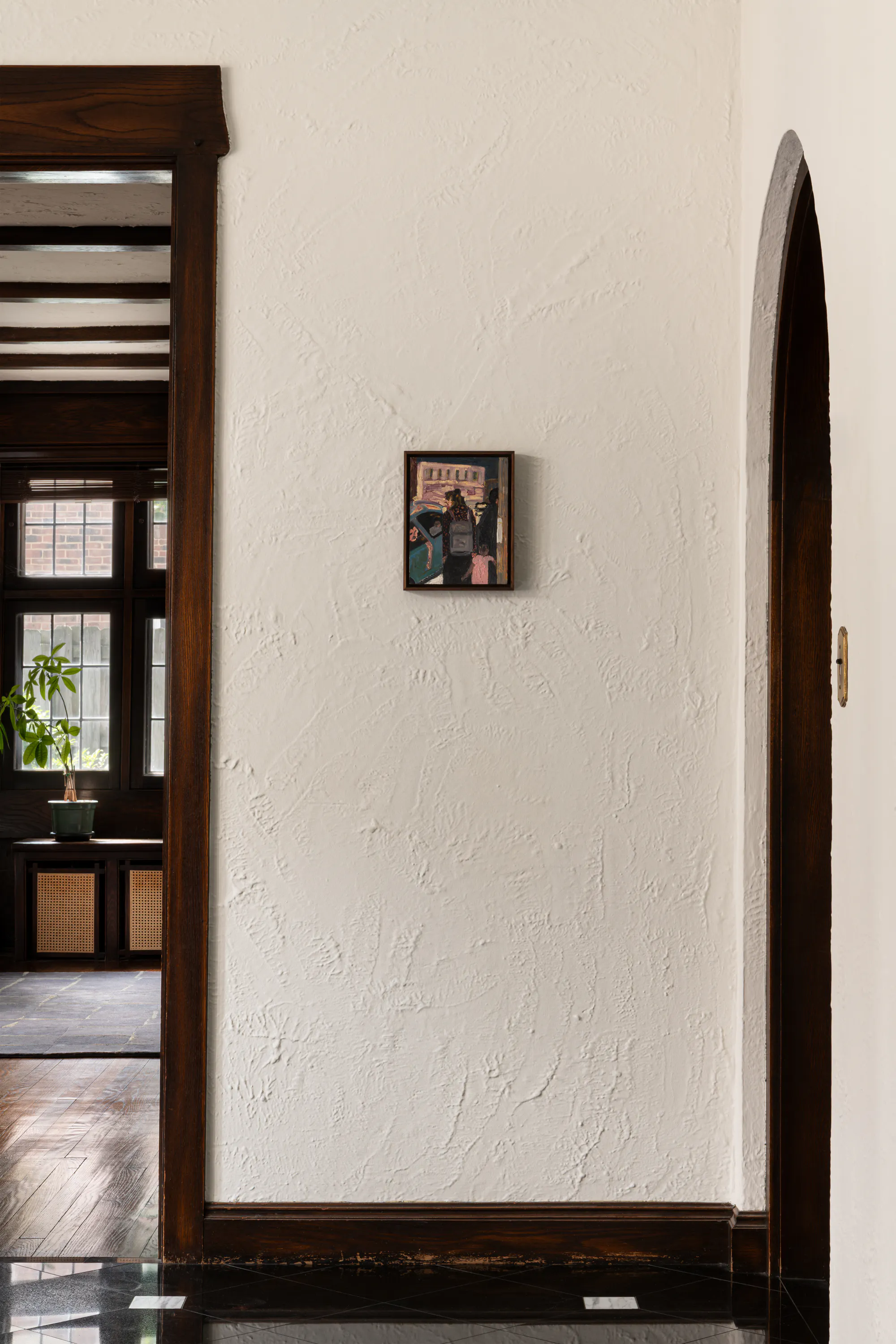
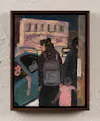
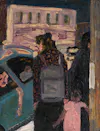
None of which makes the show a comfortable one. In City Street, Night a woman with a grey backpack, a small child in pink and a large dark figure are pressed into a narrow slot between a car and a wall, beneath a façade lit like a stage flat. set his sleepers in the corner of a room dominated by a black stove, warmth and confinement held in the same picture. sent robed and naked figures past an aqueduct with their faces wiped clean. Both Hawkins and Fedden spent their working lives on a narrow repertoire close to home. painted the Columbus blocks he had lived on for seventy years, writing his name and birthdate along the bottom edge of each panel. returned to the same shore, the same table, the same cat for six decades, and could set a woman down in a few minutes of gouache and leave her watching the water for good.
Won't Be Long asks very little of its subjects and gives them everything it has. It proposes that the near-at-hand is not a smaller world but the only one available to attention, that a stranger reading in a café is owed what a daughter on a rug is owed, and that a painting made quickly is not a painting made carelessly. Heichel paints what is in front of him for as long as it stays there. In the end the pictures argue that this is enough, and that believing so is not a modest position but a demanding one.
References
1
2
3
4
5
6
7
8
9
10
11
Cody Heichel , Won't Be Long